Peru has hundreds of retreat centers, from jungle lodges near Iquitos to yoga houses in the Andes. The photos all look peaceful, so the real differences are elsewhere: where the center is, who leads the retreat and how it keeps you safe. Here is how to choose, from a retreat center in Pisac, in the Sacred Valley.
The quick checklist
| What to check | What a good answer looks like |
|---|---|
| Location | A region that fits your retreat: the Andes for Andean ceremonies, yoga and Machu Picchu; the Amazon for ayahuasca lineages |
| Facilitators | Real names, years of practice and a clear tradition or training |
| Health screening | A medical and mental health questionnaire before your place is confirmed |
| Safety | Enough helpers during ceremonies and a clear emergency plan |
| Group size | Small enough for each person to get real attention |
| Integration | Time and support after the ceremonies, and after you go home |
Sacred Valley or Amazon?
Most retreats in Peru take place in two regions. The Amazon, around Iquitos and Pucallpa, is the home of ayahuasca traditions such as those of the Shipibo-Konibo people. The Sacred Valley, between Cusco and Machu Picchu, is Andean country: offerings to the mountains (despacho), huachuma ceremonies, and many yoga, breathwork and meditation retreats.
| Sacred Valley | Amazon | |
|---|---|---|
| Climate | Dry and sunny from May to September, rainy from November to March; cool nights | Hot and humid all year |
| Altitude | About 2,800 to 3,000 m | Close to sea level (Iquitos is around 100 m) |
| Getting there | 45 minutes to 2 hours by road from Cusco airport | A flight to Iquitos or Pucallpa, then often a boat or road transfer |
| Easy to combine with | Machu Picchu, Inca sites and Andean markets | Rivers, rainforest and wildlife |
In the Sacred Valley, plan a day or two to adjust to the altitude before an intense programme: see why sleeping in Pisac first helps.
Who leads the retreat
Ask for names. A serious center tells you who facilitates, how long they have practised and in which tradition or training. For plant medicine, ask who leads the ceremonies and how many helpers stay with the group through the night. For yoga or breathwork, ask about certification and teaching experience. Be careful with any center that promises to cure an illness or guarantees a transformation.
The safety questions to ask before you book
- Do you send a medical and mental health questionnaire before confirming my place?
- Which medicines and health conditions are not compatible with your programme?
- How many facilitators and helpers are present during ceremonies?
- What happens in an emergency: where is the nearest clinic, and how would you get me there?
- Can I sit out a ceremony or an activity if I need to?
- What support do you offer after the retreat?
Ayahuasca contains MAO inhibitors. Combined with some antidepressants (SSRIs) and other medicines, it can cause a dangerous reaction called serotonin syndrome. Tell the center about every medicine you take, and never stop a prescribed treatment on your own to join a retreat: talk to your doctor first.
On the legal side, Peru declared the traditional knowledge and uses of ayahuasca by Amazonian native communities Cultural Heritage of the Nation in 2008. That recognition protects traditional practice; it is not a quality label for any center. Laws in your home country may be different.
Group size, programme and price
Ask for the full day-by-day schedule, what is included (meals, transfers, excursions, ceremonies) and what costs extra. Prices vary a lot with length, comfort and type of programme, so compare what is included rather than the headline price. Retreat platforms help you compare; booking directly with the center is often simpler and can cost less.
Retreats at Melissa Wasi, in Pisac
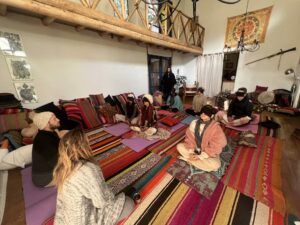
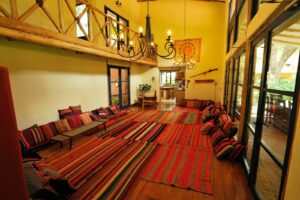
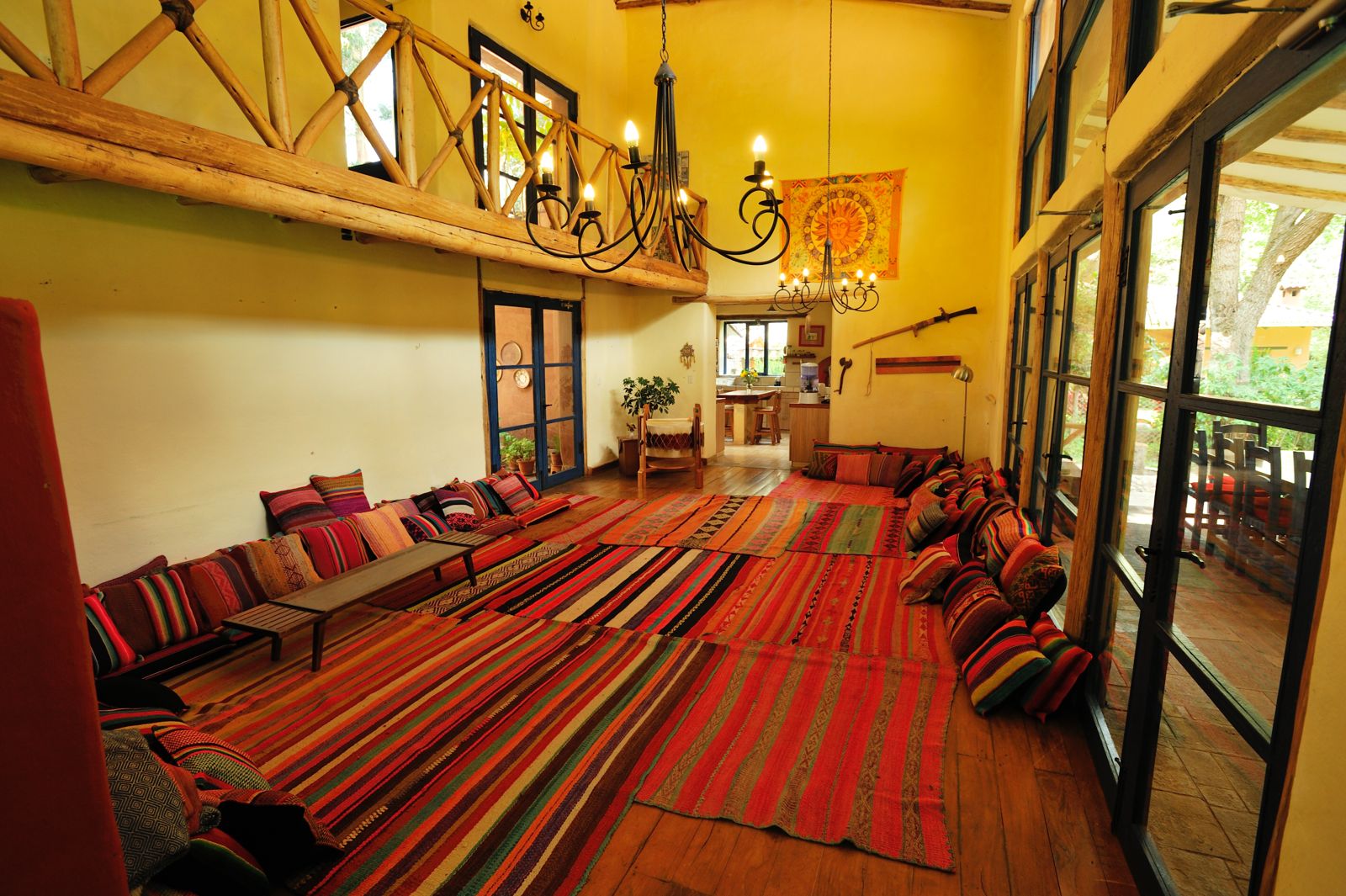
Melissa Wasi is a hotel and retreat center within walking distance of Pisac, with gardens, two shalas and room for up to 40 guests in 8 double rooms and 6 bungalows. Our programmes:
- Plant medicine retreat: one week in the Andes, 8–15 March, 8–15 May and 8–15 October 2027.
- Shamanic breathwork instructor training: a certification training, 22 February–4 March, 25 June–4 July and 19–29 October 2027.
- Darkness and silence retreat with our partner Yana Samyay: five days of darkness and silence, then three days of integration.
- Host your retreat: bring your group (from 6 guests) and lead your own programme, with local support if you want it.
Frequently asked questions
Where is the best place for a retreat in Peru?
It depends on the retreat. The Sacred Valley suits Andean ceremonies, yoga, breathwork and a trip to Machu Picchu; the Amazon is the home of ayahuasca traditions. Both regions have good and bad centers, so check the facilitators and the safety plan.
Is ayahuasca legal in Peru?
In 2008 Peru declared the traditional knowledge and uses of ayahuasca by Amazonian native communities Cultural Heritage of the Nation. Laws in your home country may be different.
When is the best time for a retreat in the Sacred Valley?
May to September is the dry season, with sunny days and cold nights. November to March is the rainy season: greener and quieter, with rain most afternoons.
How do I know if a retreat center is safe?
A safe center screens your health before you book, names its facilitators, has enough helpers during ceremonies and a clear emergency plan, and never pressures you to take part.
Can I take antidepressants and attend an ayahuasca retreat?
Some antidepressants, such as SSRIs, can interact dangerously with ayahuasca. Tell the center about every medicine and speak to your doctor; never stop a treatment on your own.
Sources: Agencia Andina, ayahuasca declared Cultural Heritage of the Nation (2008); Callaway and Grob, Ayahuasca preparations and serotonin reuptake inhibitors (1998); Cusco weather by season.