Cusco sits at about 3,400 m, and most travellers arrive by plane from Lima, at sea level. That sudden jump is why many people feel the altitude on their first night. The good news: you don’t have to sleep at Cusco’s altitude straight away. Pisac, 45 minutes away in the Sacred Valley, is around 430 m lower.
This guide is general travel information, not medical advice. If you have a heart, lung or other health condition, talk to your doctor before you travel.
What the health guidelines say
The US Centers for Disease Control and Prevention (CDC) explains that any traveler sleeping at 2,450 m or higher without time to acclimatise is at risk of altitude illness. Its guidance recommends a gradual ascent and, above 3,000 m, raising your sleeping altitude by no more than 500 m per night.
Flying into Cusco makes a gradual ascent impossible. For destinations like Cusco, the CDC notes that travelers can instead go down and sleep lower than the airport for one or two nights. That is exactly what a first stop in the Sacred Valley does.
Pisac, Cusco and the valley at a glance
| Place | Altitude | From Cusco |
|---|---|---|
| Cusco | About 3,400 m | In the city |
| Pisac | About 2,970 m | 33 km, about 45 minutes by car |
| Ollantaytambo | Roughly 2,700 m | About 80 km |
Pisac is still high: it is above 2,450 m, so you may feel the altitude there too. But starting lower and going up later gives your body time to adjust before Cusco.
A simple plan for your first days
- Day 1: land in Cusco and go straight down to Pisac. Rest, drink water and eat light.
- Day 2: a gentle walk to the Pisac market or the gardens. The CDC advises only mild exercise and no alcohol for the first 48 hours at altitude.
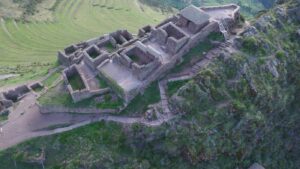
- Day 3: the Pisac ruins in the morning, or a day trip in the valley (see things to do in Pisac).
- Then: Machu Picchu from the valley, and Cusco at the end of your trip, once you are used to the altitude.
Signs to watch for
According to the CDC, headache is the main symptom of acute mountain sickness, usually with poor appetite, dizziness, tiredness or nausea. It often feels like a hangover. Two rules from the same guidance:
- Don’t go up to sleep higher while you have symptoms.
- Go down if symptoms get worse despite rest.
Confusion, unsteady walking, unusual drowsiness, a persistent cough or breathlessness at rest are signs of serious altitude illness. Seek medical help right away.
Some travelers take a medicine called acetazolamide to speed up acclimatisation. It is a prescription drug: ask your doctor before your trip whether it is right for you.
Frequently asked questions
What is the altitude of Pisac?
Pisac sits at about 2,970 m above sea level, around 430 m lower than Cusco.
Should I sleep in Cusco or the Sacred Valley first?
Sleeping in the Sacred Valley first follows the CDC suggestion for Cusco: go down and sleep lower than the airport for one or two nights, then visit Cusco later in your trip.
Can you get altitude sickness in Pisac?
Yes, it is possible: Pisac is above 2,450 m, the altitude from which the CDC considers travelers at risk. Starting there is gentler than starting in Cusco, but rest and go slowly for the first two days.
What are the first signs of altitude sickness?
A headache, often with poor appetite, dizziness, tiredness or nausea. Confusion, unsteady walking or breathlessness at rest need medical help right away.
Can I drink alcohol when I arrive?
The CDC advises avoiding alcohol for the first 48 hours at high altitude.
Source: CDC Yellow Book, High-Altitude Travel and Altitude Illness.