Breathwork trainings range from weekend workshops to programs that run over years, and the word “certified” covers all of them. I lead the shamanic breathwork in our instructor training in Pisac, Peru. These are the eight questions I would ask any training before signing up, with our own answers under each one.
The short answer
Choose a training that gives you real hours of supervised practice, screens participants for safety, names its teachers, assesses you before certifying you, and is clear about what the certificate means, the group size, the full price and the refund terms.
8 questions to ask a breathwork instructor training
1. How many hours are in person, and how much is supervised practice?
Guiding breathwork is a hands-on skill. Ask for the number of in-person hours and how many of them you spend guiding others while a trainer watches.
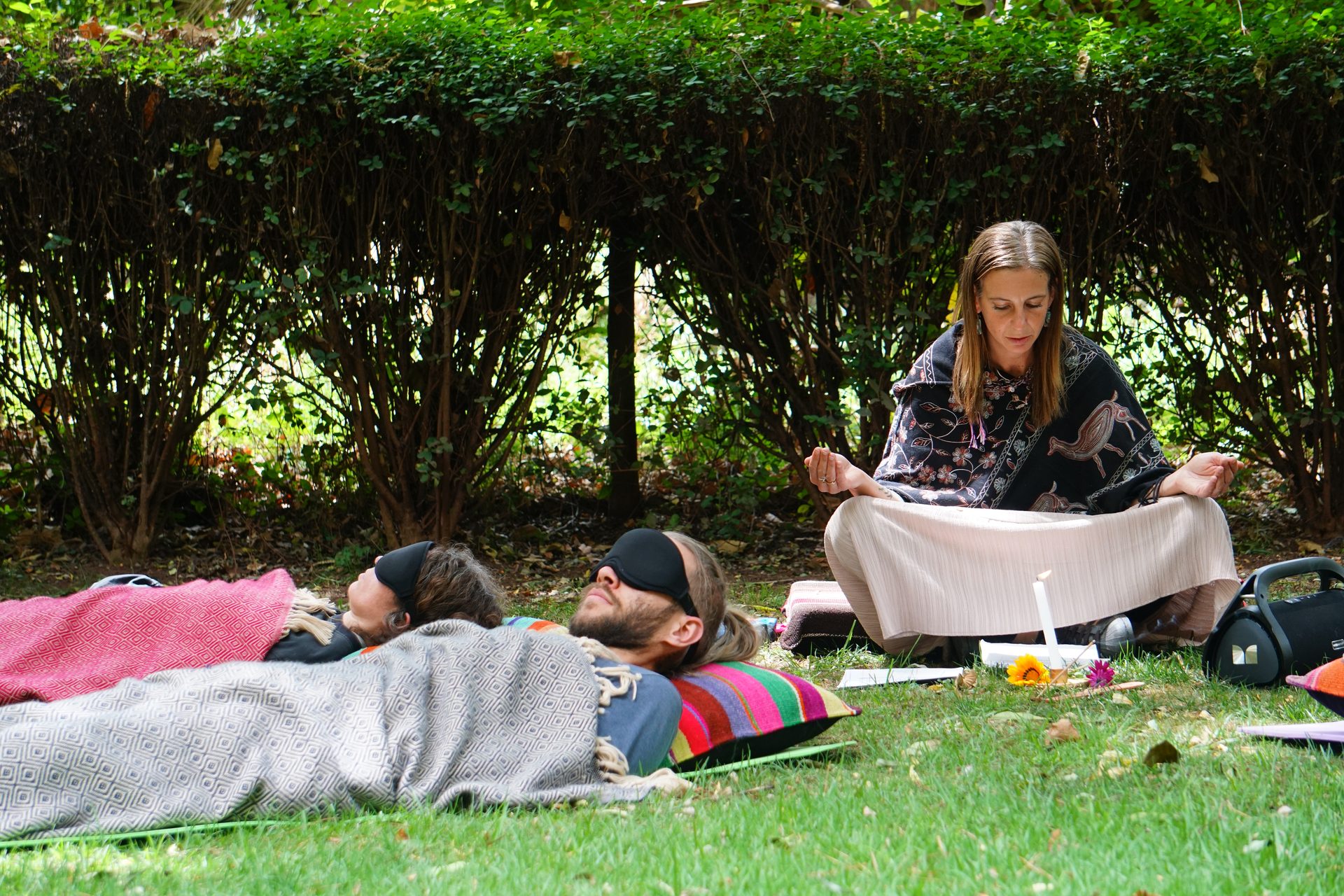
In our training: more than 70 hours in person over 10 days, living on site. Each day starts with yoga and pranayama, moves to theory and demonstrations, then breathwork sessions, first as a participant and then as the one who guides, and ends with integration, reflection and ceremony.
2. How does the training screen for safety?
Intensive breathing is not for everyone. Medical sources list contraindications such as cardiovascular disease, high blood pressure, glaucoma, severe asthma, seizure disorders and mental illness. A serious training screens participants and teaches you to screen your own.
In our training: an eight-question screening before payment covers heart conditions and blood pressure, epilepsy, breathing problems, pregnancy and recent surgery, eye conditions such as glaucoma, a history of psychosis or mania, medication, and any past adverse reaction to breathwork. If anything needs a closer look, we talk with you confidentially before you book.
3. Who teaches, and what is their background?
Look for named teachers with a real practice behind them, not just a brand.
In our training: three teachers who live in the Sacred Valley. Kamel leads the shamanic breathwork (Andean p’aqo, Reiki master, hypnotherapist and life coach). Kailin Marie guides pranayama, meditation, vocal activation and mantra (500+ hours). Daya Nimai Das, founder of the Andean Yoga School in Pisac, leads the daily yoga (RYT 500).
4. How are you assessed?
A certificate means more when you have to show what you can do.
In our training: three steps: a knowledge assessment on techniques, safety, contraindications and professional ethics; an observed practical session where you guide breathwork safely; and a final evaluation of your facilitation skills, consent practice and readiness. You need at least 90% attendance and every safety and supervised practice session. Anyone who wants more practice can take a reassessment.
5. What does the certificate say, and who issues it?
Rules and insurance for breathwork vary by country, and associations set their own standards. Ask what the certificate covers, who issues it and how it fits the rules where you plan to work.
In our training: a Shamanic Breathwork Instructor Certificate issued by Melissa Wasi and Not Your Typical Shaman, signed by the lead facilitator. It is a training-based certificate: it confirms your training in breathwork techniques, safety, ethical facilitation and supervised practice.
6. How big is the group?
In a small group, each person guides more often and gets direct feedback.
In our training: 12 places per intake.
7. What exactly is included in the price?
Compare the total: accommodation, meals, transfers and certification can double a low headline price.
In our training: 2,390 USD in a private room or 2,090 USD in a shared double room, with accommodation, all meals, the full training, certification and airport transfers. Early bird bookings get 25% off. A deposit of 480 USD (private) or 420 USD (shared) holds your place, and you can pay the regular price in three payments.
8. What happens if you cancel?
Read the refund schedule before you pay.
In our training: a full refund up to 60 days before the start and 50% from 60 to 30 days before. Within 30 days of the start, you can move your place to another intake once.
What research says about breathwork
A 2023 meta-analysis of randomised controlled trials (Fincham and colleagues, Scientific Reports) found that breathwork may help with stress and mental health, and called for more research. Breathwork is generally considered safe with a skilled practitioner, and practices that aim for an altered state, such as holotropic breathwork, should not be done alone. None of this replaces medical advice: if you have a health condition, talk to your doctor before an intensive training.
Who our training is for
People ready to guide others: yoga teachers, breathwork practitioners, therapists and space-holders who have felt what breathwork can open and want to hold it for others. It is taught in English and Spanish.
2027 dates
- 22 February to 3 March 2027, 10 days, 12 places.
- 25 June to 4 July 2027, 10 days, 12 places.
- 19 to 28 October 2027, 10 days, 12 places.
Frequently asked questions
How long does it take to become a breathwork instructor?
It depends on the training and on where you will work. Our intensive is 10 days with more than 70 hours in person.
Is breathwork safe?
It is generally considered safe with a skilled practitioner, but intensive breathing has contraindications, such as heart conditions, high blood pressure, glaucoma, epilepsy and some psychiatric conditions. A good training screens participants before they start.
Do I need experience before a breathwork instructor training?
Personal experience of breathwork helps. Our training is made for people who have felt what breathwork can open and now want to guide others.
Can I work as a breathwork instructor after this training?
Yes, within the techniques and skills you demonstrated in the training, and following the local laws, insurance requirements and professional boundaries where you work.
How much does the Melissa Wasi breathwork training cost?
2,390 USD in a private room or 2,090 USD in a shared double room, with accommodation, all meals, training, certification and airport transfers included.
Sources: Wikipedia, Breathwork (safety and contraindications, citing Young et al. 2010 and the American Cancer Society); Fincham et al., Scientific Reports, 2023; training details from our program page.