Our plant medicine retreat at Melissa Wasi includes an ayahuasca ceremony and a huachuma ceremony, so guests often ask me how the two differ. Here is where each one comes from, what a ceremony looks like with us, and what to check for your health before you sit with either.
The short answer
Ayahuasca is an Amazonian brew made from the Banisteriopsis caapi vine and a plant that contains DMT. Huachuma, also called San Pedro, is an Andean cactus that contains mescaline and has been used in the Andes for more than 3,000 years. At Melissa Wasi, ayahuasca is an overnight ceremony, while huachuma starts early in the morning with a mountain walk. Peru recognizes the traditional knowledge and uses of both as Cultural Heritage of the Nation.
Side by side
| Ayahuasca | Huachuma (San Pedro) | |
|---|---|---|
| Where it comes from | The Amazon and Orinoco basins | The Andes, between 2,000 and 3,000 m |
| What it is | A brew of the Banisteriopsis caapi vine and a DMT plant such as Psychotria viridis | A columnar cactus, Echinopsis pachanoi |
| Main active compound | DMT, made active by the vine’s alkaloids, which inhibit the enzyme monoamine oxidase (MAO) | Mescaline |
| Recognition in Peru | Cultural Heritage of the Nation since 2008 (Amazonian native communities) | Cultural Heritage of the Nation since 2022 (traditional healing of northern Peru) |
| At Melissa Wasi | Overnight ceremony in the Huni Kuin tradition, with traditional songs and prayer | Early start, ceremony and mountain walk in the Andes |
Ayahuasca, the Amazonian brew
Ayahuasca comes from the Amazon and Orinoco basins, where Indigenous peoples use it in traditional medicine and shamanism. The ceremony usually lasts the whole night, and purging, with vomiting and diarrhea, is common. Traditional practitioners advise against drinking it without one or more well-trained guides.
In Peru, ayahuasca is legal. In 2008 the National Institute of Culture declared the traditional knowledge and uses of ayahuasca by Amazonian native communities Cultural Heritage of the Nation, to protect them from out-of-context, commercial use.
Huachuma, the Andean cactus
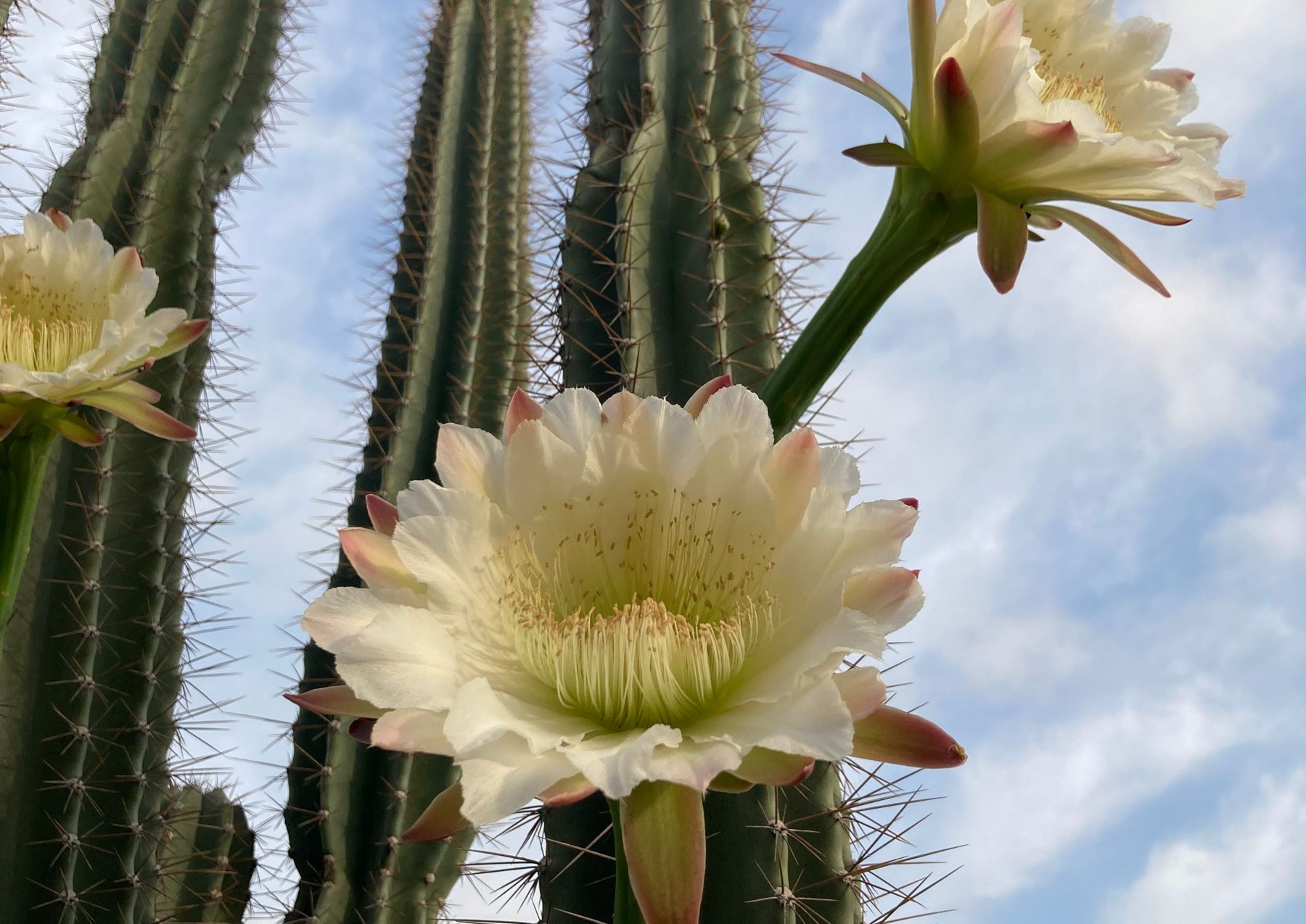
Huachuma, also written wachuma or achuma and known as San Pedro, is a columnar cactus that grows in the Andes at 2,000 to 3,000 m. It has been used there for healing and divination for more than 3,000 years. According to Peru’s Ministry of Culture, its oldest known depiction is carved in stone at Chavín de Huántar, in the first millennium BC.
In 2022 the Ministry declared the traditional knowledge and uses of San Pedro in the curanderismo, or traditional healing, of northern Peru Cultural Heritage of the Nation.
Before either ceremony: your health
Both are strong experiences, and neither replaces medical or psychological care. Three points matter most.
- Antidepressants: the alkaloids in ayahuasca inhibit MAO. Combined with SSRI antidepressants, they can cause serotonin syndrome, a potentially serious reaction.
- Mental health: some psychiatric conditions, such as psychosis or bipolar mania, make these ceremonies unsuitable.
- Your medicines: keep taking any prescribed medicine and speak with your prescribing clinician first. At Melissa Wasi, certain medicines, heart conditions, pregnancy and a history of psychosis can make some ceremonies unsuitable, so a confidential health screening helps you and the team decide together.
Outside Peru, the legal status of ayahuasca and mescaline varies from country to country.
Which one is right for you?
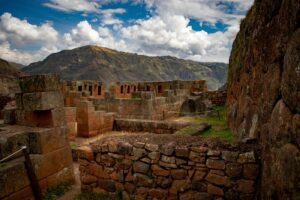
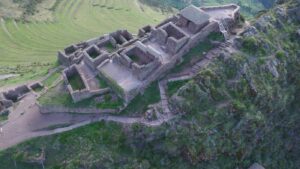
It is not a contest. The choice depends on your health screening, on whether a night ceremony or a long day outdoors suits you better, and on which tradition speaks to you. Our huachuma walk asks for good physical preparation and an assessment. Pisac sits at about 2,970 m, so if you arrive from the coast, read why to sleep in Pisac first.
Both in one retreat at Melissa Wasi
- Program: 8 days and 7 nights. Day 3 ends with an overnight ayahuasca ceremony in the Huni Kuin tradition, guided by Txana Txatxabari. Day 4 is for rest and integration. Day 6 starts early with the huachuma ceremony and a mountain walk with Gregorio Diaz. A temazcal (sweat lodge) closes the week.
- Your choice: every ceremony is optional, and first-time participants are welcome.
- 2027 dates: 8 to 15 March, 8 to 15 May and 12 to 19 October.
- Price: 4,300 USD in a private room or 3,950 USD in a shared double room, with accommodation, daily meals, ceremonies, integration practices, facilitation and excursion transport. Early booking gives 25% off until about a month before each retreat.
- How to join: applying is free, and your place is confirmed after the confidential health screening.
After the ceremonies, Kamel also offers one-to-one coaching on Zoom through Not Your Typical Shaman, for those who want support once they are home.
Comparing centers? Read how to choose a retreat center in Peru.
Frequently asked questions
What is the difference between ayahuasca and San Pedro?
Ayahuasca is an Amazonian brew of the Banisteriopsis caapi vine and a plant that contains DMT, usually taken in an overnight ceremony. San Pedro, or huachuma, is an Andean cactus that contains mescaline, used in the Andes for more than 3,000 years.
Is huachuma the same as San Pedro?
Yes. Huachuma, also written wachuma or achuma, is the Andean name for the San Pedro cactus, Echinopsis pachanoi.
Is ayahuasca legal in Peru?
Yes. Ayahuasca is legal in Peru, and the traditional knowledge and uses of Amazonian native communities were declared Cultural Heritage of the Nation in 2008. The traditional uses of San Pedro in northern Peru received the same status in 2022.
Can I drink ayahuasca if I take antidepressants?
Combining ayahuasca with SSRI antidepressants can cause serotonin syndrome, a potentially serious reaction. Never stop or change a medicine on your own: speak with your prescribing clinician and tell the retreat team through its health screening.
Can I do both in one retreat?
Yes. At the 8-day plant medicine retreat at Melissa Wasi, the ayahuasca ceremony takes place on the night of day 3 and the huachuma ceremony on day 6, with a day of rest and integration in between. Each ceremony is your choice.
Sources: Melissa Wasi plant medicine retreat; Andina, 12 July 2008; El Peruano, Resolución Viceministerial 000252-2022-VMPCIC/MC (2022); Wikipedia, Ayahuasca; Wikipedia, Echinopsis pachanoi; Callaway & Grob, Journal of Psychoactive Drugs, 1998.