The ceremony ends, and the real work starts when you get home. This is the 30-day plan I share with guests after a plant medicine, darkness or breathwork retreat at Melissa Wasi. It is a frame, not a rulebook, and it does not replace medical or psychological care.
The short answer
Integration means making sense of what you lived and bringing it, step by step, into your daily life. Keep a quiet buffer of a few days after the retreat, write things down while they are fresh, keep one simple daily practice, share with people you trust, and choose one or two concrete changes. Thirty days is a start: researchers suggest around six months for longer-term support.
What integration means
In a 2022 review, Bathje, Majeski and Kudowor describe integration as a process in which you revisit your experience, make sense of it, work through it and translate it, then gradually bring its lessons into your life. They group integration practices into six areas: mind, body, spirit, the natural world, relationships and community, and lifestyle.
A 2023 study of 1,630 ayahuasca drinkers from a global survey (Cowley-Court and colleagues) found common challenges: feeling disconnected, and going back to an “old life” with new understandings. What helped most was a like-minded community and ongoing practices such as yoga, meditation and journaling. The authors note that integration can be challenging and take considerable time.
Your 30-day plan
| When | Focus | What to do |
|---|---|---|
| Days 1 to 3 | Buffer | Rest, sleep, simple meals and few commitments. Keep big decisions for later. |
| Days 1 to 7 | Mind | Write down what you lived while it is fresh: images, words, feelings, questions. Do not try to explain everything yet. |
| Days 8 to 14 | Body and nature | Choose one daily practice you can keep, such as breathwork, yoga, meditation or a walk outdoors, even for 15 minutes. |
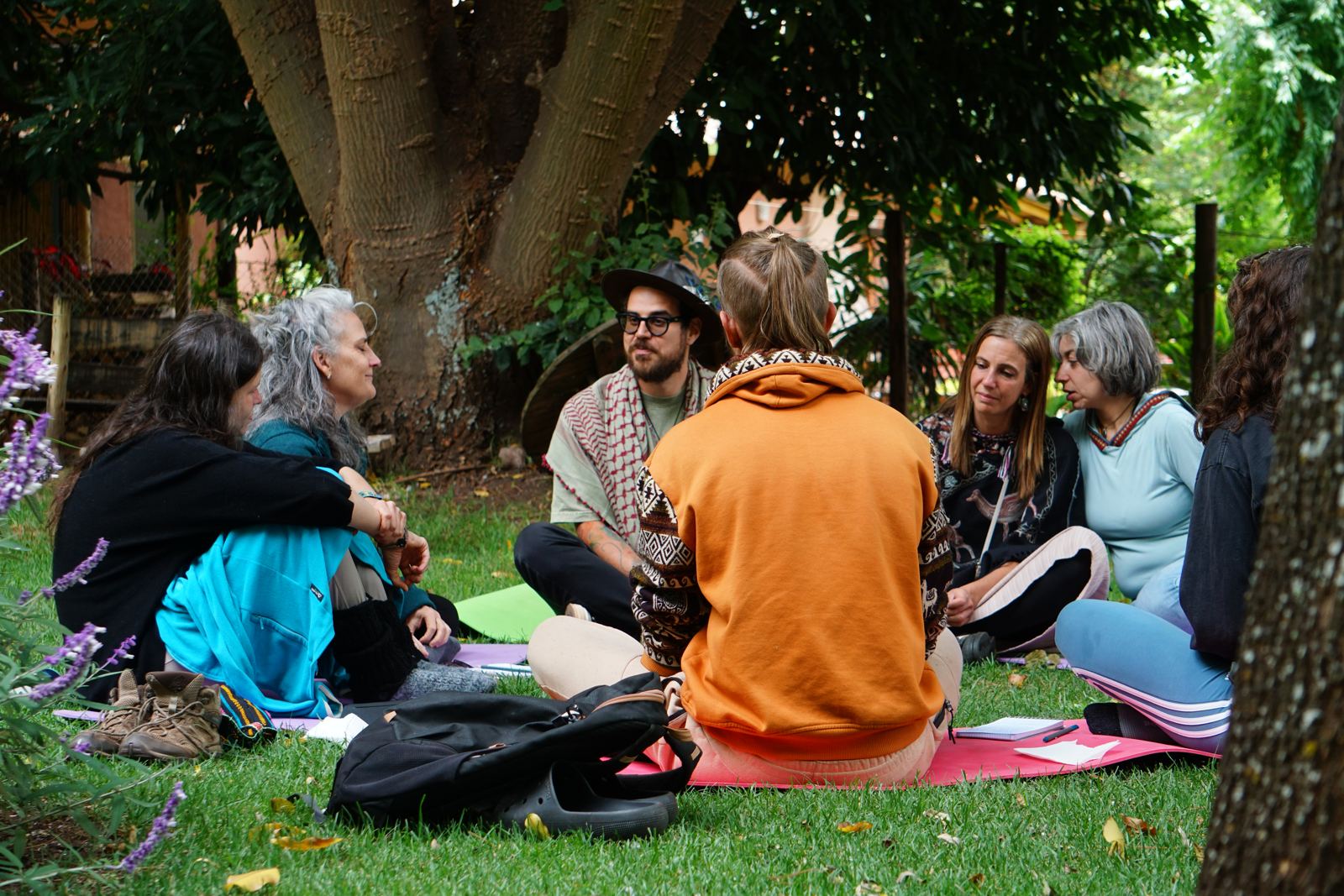
| Days 15 to 21 | Relationships | Share your experience with one or two people you trust, or join an integration circle. You decide how much to say. |
| Days 22 to 30 | Lifestyle | Reread your notes and choose one or two concrete changes. Plan your support for the coming months. |
The first days: protect the buffer
The study above suggests building a buffer of at least a few days after ceremonies. If you can, do not fly home the morning after your last ceremony, and do not go straight back to a full work week. Tell the people around you that you may need quiet time.
Weeks 2 to 4: from insight to daily life
- Keep it small: one practice done every day helps more than five practices done once.
- Choose your listeners: not everyone will understand your experience. Start with people who listen without judging, or with others who have lived something similar.
- Turn insights into actions: “I want more calm” becomes “I breathe for ten minutes before work.”
- Look further than 30 days: a therapist, a mentor or a regular group can support you over the following months.
When to ask for help
Some days after a retreat can feel strange or heavy. If for several days you feel very anxious, low or confused, if your sleep does not come back, or if you notice changes in perception that do not fade, talk with a doctor or a mental health professional. Keep taking any prescribed medicine and never change it on your own. If you have thoughts of harming yourself, contact your local emergency services now.
Integration at Melissa Wasi
- Plant medicine retreat: integration is part of every day of the 8 days. Ask the team about the individual follow-up available for your dates.
- YanaSamyay, our darkness and silence retreat: the last three days are for integration, and a private integration call follows after you go home.
- One-to-one support from home: Kamel also offers private coaching sessions on Zoom through Not Your Typical Shaman, as single sessions or a 3-month package. A free 15-minute discovery call helps you see if it fits.
Before you book, read the difference between ayahuasca and huachuma, what happens on a darkness retreat and how to choose a retreat center in Peru.
Frequently asked questions
What does integration mean after a retreat?
It is the process of making sense of what you lived, working through it and bringing its lessons into your daily life, in your mind, body, relationships and habits.
How long does integration take?
It varies. A study of 1,630 ayahuasca drinkers found that integration can take considerable time, and its authors suggest about six months as a timeframe for longer-term support. A 30-day plan is a good start.
What should I do in the first days after a ceremony?
Keep a buffer of at least a few days: rest, sleep, simple meals and few commitments. Write down what you lived and keep big decisions for later.
What practices help integration?
Ayahuasca drinkers in the 2023 study most often found help in a like-minded community and in ongoing practices such as yoga, meditation and journaling. Time in nature, movement and creative work are also common integration practices.
When should I get professional help?
If for several days you feel very anxious, low or confused, if your sleep does not come back, or if changes in perception do not fade, talk with a doctor or a mental health professional. If you have thoughts of harming yourself, contact emergency services now.
Sources: Bathje, Majeski & Kudowor, Frontiers in Psychology, 2022; Cowley-Court et al., Psychoactives, 2023; Melissa Wasi plant medicine retreat; YanaSamyay.